
June 12, 2026
Factory Finish vs Site Polish: the difference you live with
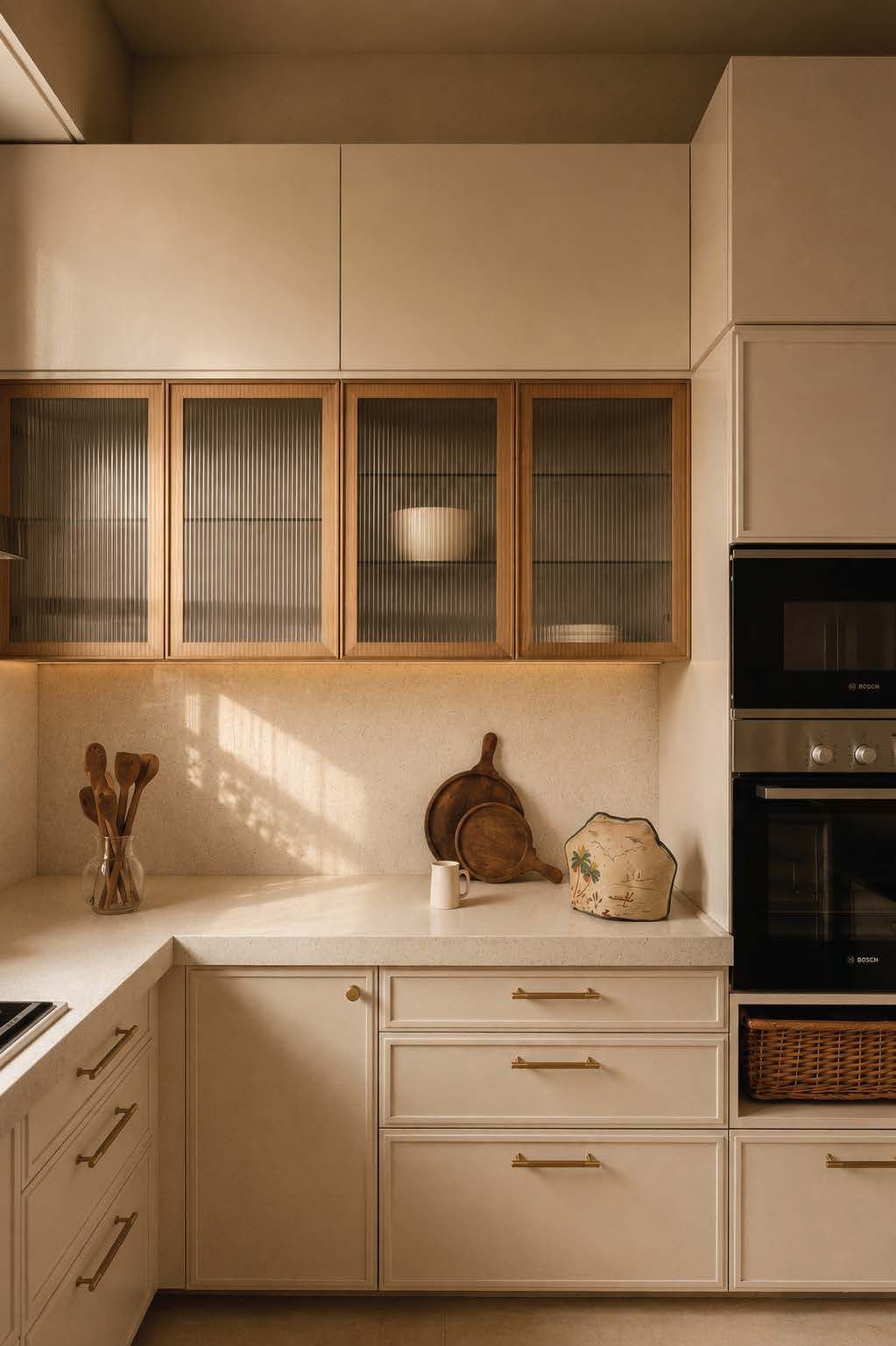
Walk into any under-construction apartment in Bengaluru and you can smell the difference between the two ways India builds furniture. One flat has a carpenter hand-spraying shutters behind a plastic curtain in the living room; dust from the civil work next door is settling into the wet paint as you watch. The other flat is empty; its kitchen is being built forty minutes away in a factory, and will arrive finished.
We are unapologetically in the second camp. Here's why.
Dust is the enemy of every finish
A PU coat stays tacky for hours. In that window, every airborne particle that lands becomes a permanent grain under the topcoat. A dust-free spray booth with filtered airflow is not a luxury. It is the minimum condition for a controlled surface. No site, however well-managed, can offer it.
Ovens beat weather
Site-applied finishes dry at the mercy of humidity. Monsoon week? Your topcoat blushes. Kiwaro panels are oven-dried between all six coats, so layer adhesion and cure hardness are identical in June and January.
The finish you approved in the showroom should be the finish that survives the monsoon. That's a process question, not a skill question.
Repeatability is a machine's virtue
A skilled polisher's tenth panel of the day differs from his first. A calibrated spray line's ten-thousandth doesn't. When a shutter is damaged during your civil work (it happens), we spray its replacement to the same recipe, and it matches.
What it means for you
- No spray fumes or sanding dust in your home: installation is clean assembly.
- Uniform sheen across every shutter, edge and groove.
- A written warranty a site job can't honestly offer: 10 years structure, 3 years finish.
Factory finishing costs more than a site polish quote. It is also the reason the kitchen you approved is the kitchen you get, and still get, a decade in.